The European Business Wallet (EUBW) is a digital identity solution that lets companies identify themselves online, exchange verifiable information, and manage documentation securely and consistently across the EU. It is part of the EU’s wider effort to strengthen digital identities and reduce administrative burden, bringing certificates, permits, and other company information together in one wallet.
The Digital Product Passport (DPP) is a separate EU initiative. It gives each product a structured digital dataset covering materials, origin, sustainability, repair options, and recyclability, so products carry traceable, transparent environmental and lifecycle data.
Two initiatives, one chain of trust
DPP and EUBW are closely connected. The wallet provides the digital infrastructure that lets businesses issue, verify, and share product-passport data securely and interoperably. It links passport information to a verified business identity, so data can move between authorities, partners, and other stakeholders across borders in a consistent, reliable way.
Combining the two creates a coherent digital chain from company to product. Businesses can document sustainability and meet the EU’s coming circular-economy rules, because company data and product data live in one shared ecosystem, with secure, automated exchange across supply chains.
The EU’s own regulatory proposal puts it plainly:
The Digital Product Passport (DPP), central to the EU’s circular economy agenda, depends on trusted access to conformity and sustainability data. The Business Wallets proposal can prove legal identity and any granted access rights, allow conformity declarations to be signed and sealed, and ensure product data is exchanged securely and verifiably across borders.
Reference: Proposal for a Regulation of the European Parliament and of the Council on the establishment of European Business Wallets.
How a Digital Product Passport works in practice
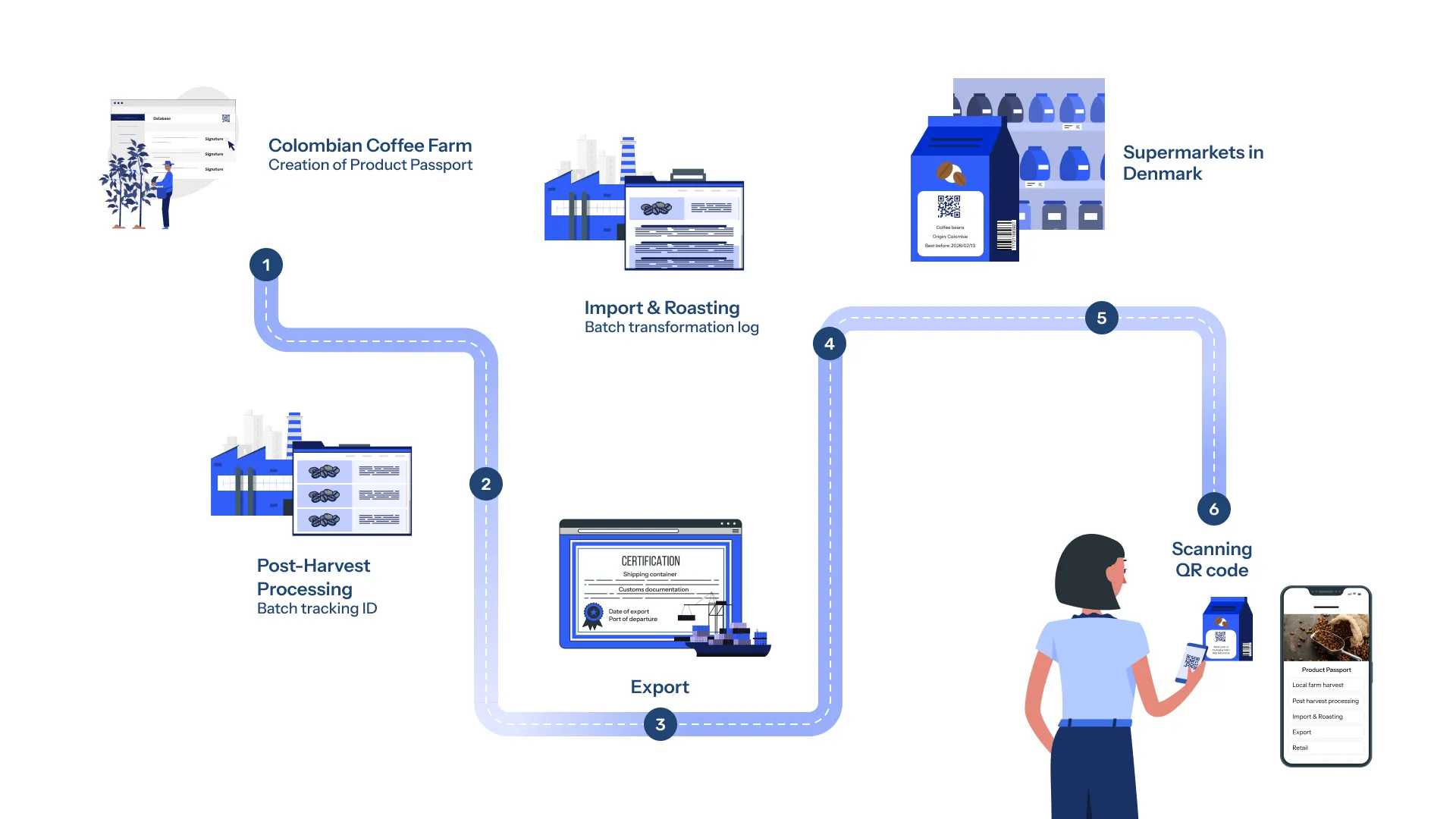
The EU has already introduced product-passport requirements for some categories, including batteries. The push toward stronger environmental, traceability, and ethical-responsibility requirements is expected to reach other imported goods, with coffee a likely candidate. With a DPP, every bag of coffee imported into the EU can carry documented, verified data: the precise cultivation location, records of working conditions, and full traceability through the supply chain.
If digital-traceability requirements are not met, Colombian coffee risks losing competitiveness and, in the worst case, access to EU markets, should passports become mandatory the way they are for batteries. That puts pressure on farmers, cooperatives, and exporters to modernise data handling, document sustainability, and increase transparency. It is not only about export eligibility. It is about keeping global trust and securing the long-term future of Colombian coffee.
The solution
To meet these requirements, a tamper-evident Digital Product Passport (for example, one backed by a blockchain or distributed ledger) can collect and secure data across the whole value chain, from cultivation in Colombia to the retail shelf in the EU.
The passport can carry, among other things:
- Data from the cultivation site
- Sustainability documentation
- Working conditions and social standards
- Post-harvest processes and quality controls
- Export and import documentation
- Retail packaging details
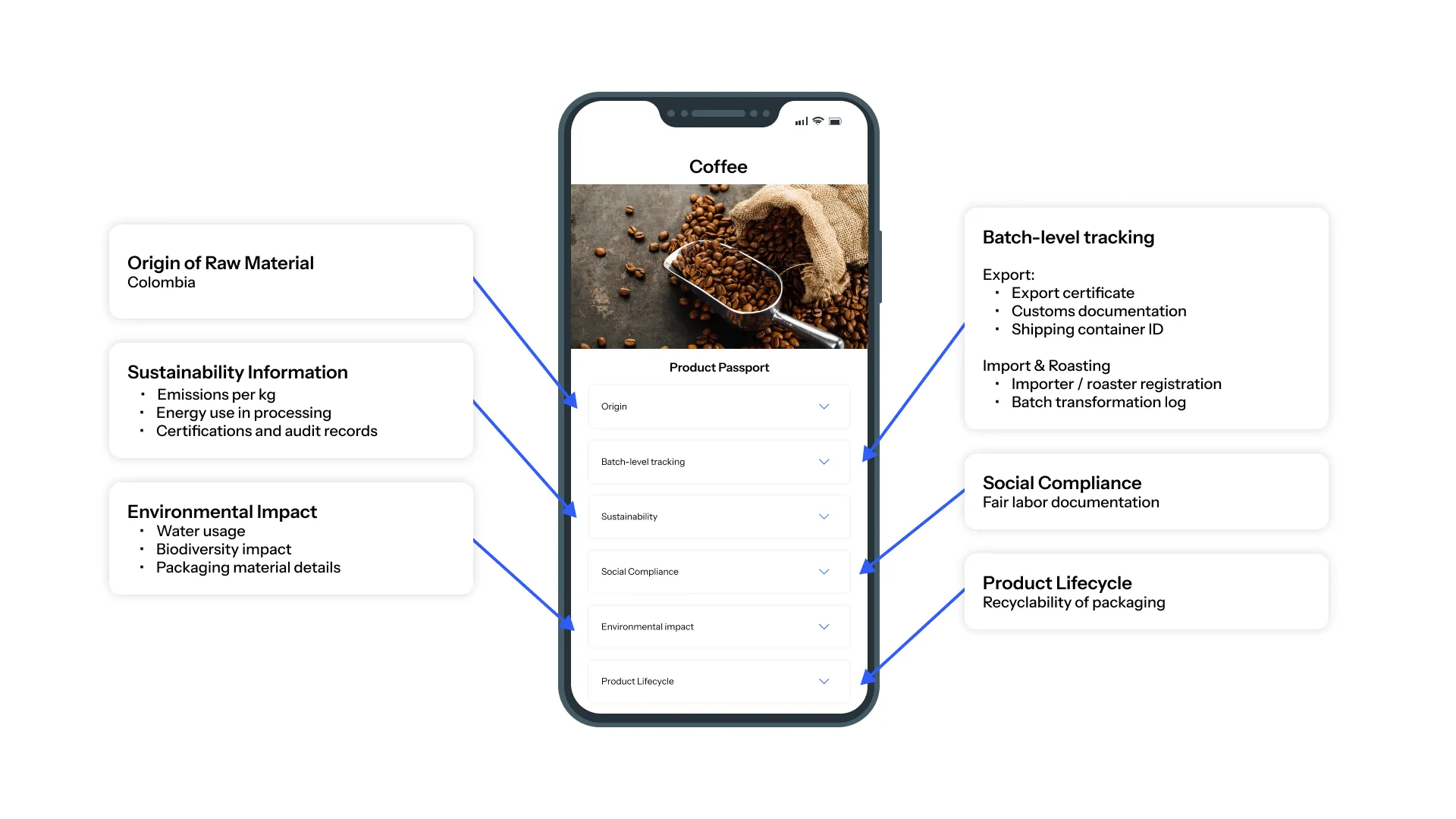
All of it is recorded on a tamper-evident ledger, so the data cannot be altered and stays available to authorities, buyers, and consumers.
A QR code on every bag
Each bag of coffee gets its own QR code that links straight to its product passport. A shopper can scan it and get a trustworthy, up-to-date account of the coffee’s origin and its documented journey through the value chain.
Exploring product passports or business-wallet verification for your supply chain?