On 3 June 2026, Denmark launched AltID, its new digital identity wallet. At first glance it looks like another government app for storing ID documents. It is the start of something larger: a shared trust infrastructure for Europe.
AltID is part of the European Digital Identity framework under eIDAS 2.0, which makes it more than a Danish project. It is one piece of a coordinated effort to give every EU member state interoperable, privacy-preserving digital identity services. The consequences reach well past login screens, into onboarding, compliance, age verification, access management, and AML.
Identity stops being a per-service feature
Digital identity has lived in silos for decades. Banks built their own onboarding. Governments built national ID schemes. Enterprises ran separate authentication and access systems. The result was duplicated checks, fragmented user journeys, and far more personal data collected and stored than anyone needed.
eIDAS 2.0 changes the model. By the end of 2026, every member state must offer at least one European Digital Identity Wallet (EUDI Wallet) to its citizens, residents, and businesses. People will store and present identity credentials, age proofs, and professional qualifications across both public and private services. Identity moves from a service-specific capability to a shared layer that any service can rely on.
What AltID actually does
AltID is available to people over 13 who have a CPR number and MitID. The first release includes a digital ID card and an age credential, with more credentials to follow, and the wallet will work across the EU over time.
It is built around one principle: you share only what is needed. To enter an age-restricted service, you can show that you are over 18 without revealing your date of birth, CPR number, or anything else. That is a real break from the document-upload model most verification still relies on.
From collecting data to proving a fact
Organizations have long asked for more than they need. Upload your passport. Share your date of birth. Provide proof of address. In most cases a single attribute answers the actual question. Can this person legally buy alcohol? Are they over 18? Are they licensed for this work?
The EUDI Wallet ecosystem supports selective disclosure, so a user can prove a specific fact without exposing the rest. It draws on verifiable credentials, cryptographic attestations, device-bound wallets, and zero-knowledge proofs. The outcome is simple: you can confirm eligibility without holding personal data you never wanted to be responsible for in the first place.
Why this matters for businesses
Most of the attention goes to the wallets themselves. The real opportunity is elsewhere. Few organizations will ever build a wallet. They will plug verification into the journeys they already run: customer onboarding, KYC, AML, access management, visitor management, age checks, and cross-border services. The wallet becomes the source of trust, and the business consumes verified attributes through an API. That integration layer is where the next wave of work sits.
Partisia is already in the AltID ecosystem
Moving from policy to everyday use takes more than wallets. It needs organizations that can receive, verify, and act on digital credentials inside real services.
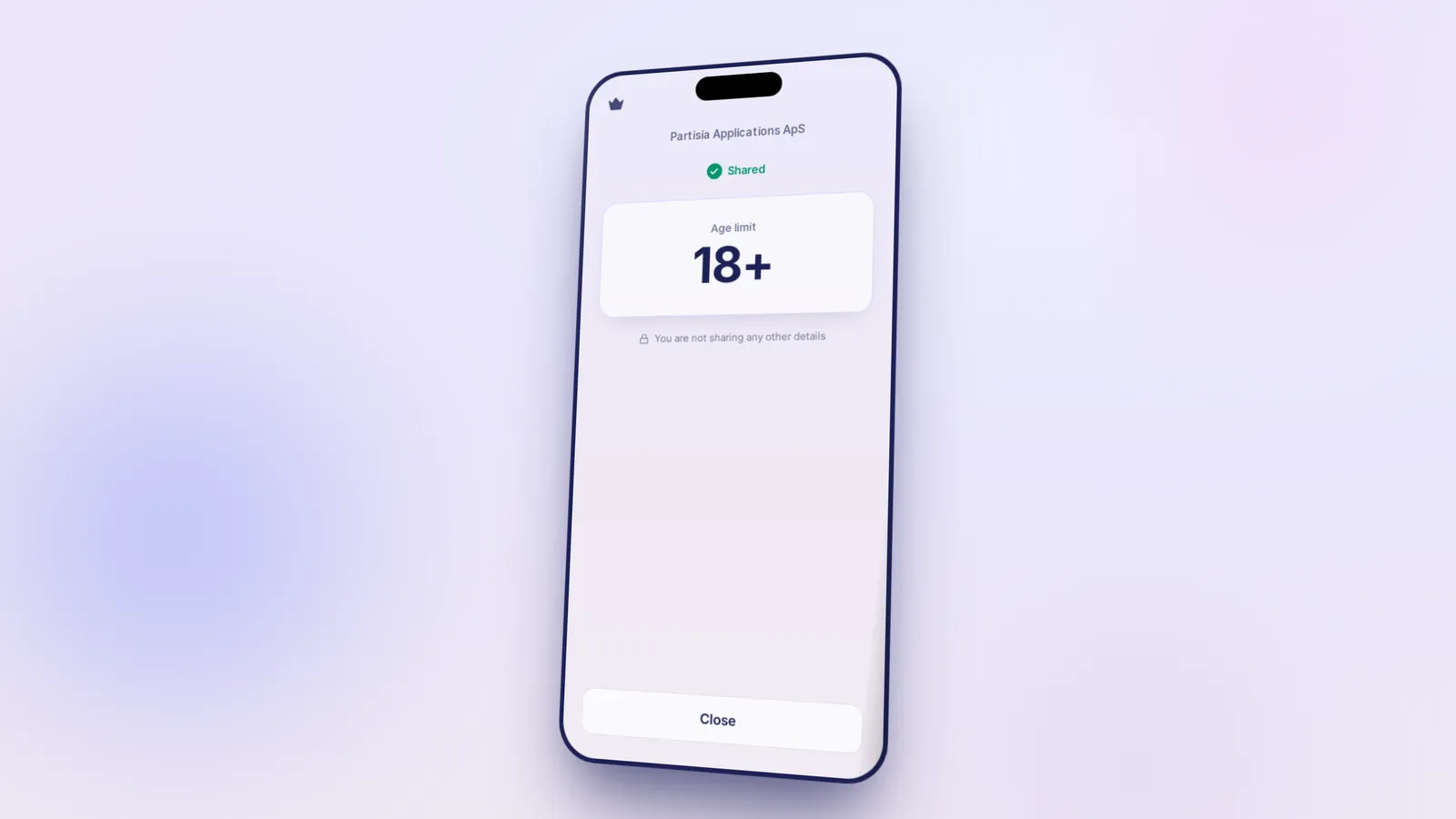
Partisia has worked directly with the Danish Agency for Digital Government (Digitaliseringsstyrelsen) and tested AltID before its public launch. That early access gave us a clear view of both the opportunities and the practical work involved in wiring wallet-based verification into live systems. Partisia is among the organizations in the emerging AltID ecosystem of authorities and receivers as a receiver of wallet-based credentials.
This matters because AltID and the wider EUDI Wallet framework only succeed if verification is available across industries: onboarding, visitor and access management, age verification, financial services and AML, public services, and cross-border interactions. Issuing credentials is one half of the equation. Letting organizations verify them while preserving privacy and staying compliant is the other.
It also fits how we already work, on privacy-preserving verification, secure identity flows, and cryptographic trust models that confirm a claim without exposing the data behind it. The lesson from AltID is consistent with what we have seen for years: the future of identity is not about collecting more data. It is about verifying exactly what is needed, when it is needed.
Age verification is the first big use case
Of the applications eIDAS 2.0 enables, age verification is the most immediate. Across Europe, services face growing pressure to run privacy-preserving, GDPR-aligned age checks with less data collection and consistent rules across borders. The old approach leans on document uploads and manual review.
The wallet model removes that. Instead of sharing a full ID, a user proves they meet an age requirement. Age verification turns from a document check into a cryptographic proof: no upload, no manual review, no stored identity documents, and an instant result. This is the direction AgeVerify is built for, confirming age while keeping data exposure and operational overhead to a minimum.
What to prepare for
The first wallets are only now reaching production, but the implications are already clear enough to act on. Onboarding and authentication will increasingly run through wallet-based verification rather than forms and uploads. Systems should request only the attribute a transaction needs, such as over 18, resident in the EU, or licensed professional. Data minimization becomes a property of the architecture rather than a line in a policy. Verification has to work across member states. And the strategic weight shifts from storing identity toward validating trust signals.
Identity as infrastructure
The clearest lesson from AltID and eIDAS 2.0 is that digital identity is becoming infrastructure rather than a product category. The closest parallel is payments: isolated bank systems became interoperable networks, and identity is heading the same way, toward shared standards, portable credentials, cross-border interoperability, and cryptographic trust. The wallet is the part people see. The infrastructure underneath is where the lasting value is built.
The launch of AltID matters for Denmark, and it reaches further than that. It marks the start of a European trust layer where identity, privacy, and verifiable credentials meet in a common framework. eIDAS 2.0 will not be judged by wallet downloads alone, but by the services built on top of it: onboarding, compliance, age verification, visitor management, and secure access to digital and physical services.
Partisia sees this transition first-hand, as an organization already in the AltID ecosystem that tested the wallet ahead of launch.
The hard part is no longer creating digital identities. It is making trust, privacy, and verification work across organizations, sectors, and borders. The work now is to build the infrastructure that makes it usable.
Want to put verifiable identity and credentials to work in your own services?