All articles

Digital guest registration

Digital guest registration with verifiable identity credentials

Why visitor management keeps breaking Visitor flows often rely on reception staff typing details into local tools, guests repeating the same information, and teams maintaining separate lists for security, facilities, and compliance. That creates three recurring issues: queues at peak times, ...


Identity flagging in fraud detection – risks, rules, and best practice

Identity flagging in fraud detection – risks, rules, and best practice

Identity flagging in fraud detection explained Identity flagging is a practical way to mark a person, account, device, or business identity as higher risk based on evidence. It is a risk signal, not a verdict. The goal is simple: catch repeat abuse early, connect signals across channels, and help ...

Federated learning in finance – privacy-safe AI collaboration

Federated learning explained – compliant AI for financial institutions

What federated learning is and why it matters in finance Federated learning is a machine learning approach that allows multiple organizations to train a shared AI model without pooling their underlying data. Instead of moving sensitive datasets to a central location, the model is distributed to ...

Access management

Access management – secure, privacy-first access control explained

Access management – what it is, how it works, and why it’s changing Access management is the discipline of controlling who can enter a physical or digital environment, under what conditions, and for how long. In modern organizations, access management goes far beyond doors and badges. It now sits ...

Business wallet EU identity – what it means for companies

EU business wallet identity – how it works and what to prepare for

Business wallet EU identity – what it means and how it works The Business Wallet is the EU’s new identity solution for companies. It gives organizations a secure, verifiable way to prove who they are and to exchange trusted business information across borders. The initiative sits within the wider ...

EU business wallet regulation explained for 2026 and beyond

EU business wallet regulation explained for 2026 and beyond

What the European business wallet regulation aims to achieve The European business wallet regulation is part of a broader push to modernize how companies identify themselves, exchange documents, and meet compliance duties across the EU. Instead of relying on local portals, unverified PDFs, or ...

Mule accounts explained - detection signals, controls, and compliance

Mule accounts explained - detection signals, controls, and compliance

Mule accounts explained Mule accounts are accounts used to move illicit funds on behalf of criminals. The account holder might be complicit, coerced, or manipulated. Either way, mule activity fuels scams, account takeover, laundering, and cross-border fraud. If your monitoring is limited to one ...

On-demand webinar: age verification, myths, and eIDAS 2.0 explained

On-demand webinar: age verification, myths, and eIDAS 2.0 explained

Age verification, myths, and eIDAS 2.0 - watch on demand Age checks used to be an afterthought. A simple checkbox. A weak barrier. Now they sit at the center of one of the hardest questions in European digital policy:

Decentralized identity Europe – standards, use cases and 2026 outlook

Decentralized identity Europe – standards, use cases and 2026 outlook

Decentralized identity Europe – what it means and why adoption is accelerating Europe is moving quickly toward decentralized identity as the foundation for secure and trusted digital services. Driven by the EUDI Regulation, updates to eIDAS 2.0, and increasing demand for privacy-preserving ...

EUDI wallet 2026 guide for businesses and service providers

EUDI wallet 2026 guide for businesses and service providers

What the EUDI wallet is and why the EU is introducing it The European Digital Identity Wallet (EUDI wallet) is a mobile identity wallet that lets citizens, residents, and businesses prove who they are and share verified attributes across the EU. It is defined in Regulation (EU) 2024/1183, which ...

Ecodesign for Sustainable Products Regulation (ESPR)

ESPR and the future of sustainable product compliance explained

Ecodesign for Sustainable Products Regulation (ESPR) The Ecodesign for Sustainable Products Regulation (ESPR) is one of the EU’s most ambitious attempts to make products more durable, sustainable and transparent. It goes far beyond earlier ecodesign rules. Instead of focusing mainly on ...

DPP: the new foundation for EU product traceability and trust

Digital Product Passport (DPP) – EU compliance through EUBW infrastructure

The Ecodesign for Sustainable Products Regulation (ESPR) and related EU legislation have made the Digital Product Passport (DPP) a central element for product traceability, sustainability, and regulatory compliance. A DPP assigns each product a structured digital record containing materials, ...

digital product passport - coffee

European Business Wallet (EUBW) & Digital Product Passport (DPP)

European Business Wallet (EUBW) is a digital identity solution that enables companies to identify themselves online, exchange verifiable information, and manage documentation securely and in a standardized way across the EU.

EU Business Wallet

PDF: EUBW - Verifiable Credentials beyond Identities

Digital Wallets for Business Decentralized Identities solves the basic problem of allowing natural persons to prove and disclose attributes of their identity. However, there exist many more legal entities than just natural persons. These are known as legal persons and corporations and organisations ...

Know Your Business (KYB) – modern verification for regulated industries

Know Your Business (KYB) – modern verification for regulated industries

Know Your Business (KYB) – what it is, why it matters, and how to modernize compliance Know Your Business (KYB) is now a core requirement for regulated industries. Banks, fintechs, payment providers, corporate marketplaces, and B2B platforms must verify the legitimacy of any business they serve — ...

Visitor Management System

Visitor Management System – secure, frictionless access for modern facilities

Visitor management system – secure, digital guest access A visitor management system is more than a digital sign-in tool — it’s the backbone of how organizations securely admit, verify, and track guests across locations. Whether you operate corporate facilities, campuses, government buildings, or ...

EUBW (EU Business Wallet): A shift in how companies identify themselves

EU Business Wallet (EUBW): what it means for firms in the EU

The EU is building more than a digital identity system for individuals. The EUBW (EU Business Wallet) is the corporate version: a verified wallet for companies that want to operate across the Union without running into slow, outdated checks.

Anti money laundering solutions

Anti Money Laundering (AML) solutions – building intelligent, compliant defenses against financial crime

Anti Money Laundering (AML) solutions have evolved from check-box compliance systems into data-driven intelligence platforms. The rise of digital finance, instant payments, and cross-border transactions has increased the scale and complexity of financial crime - making traditional monitoring ...

ABC (Anti-Bribery and Corruption) – strengthening integrity in financial compliance

Anti-Bribery and Corruption (ABC) programs are no longer optional. They are a regulatory expectation and a commercial necessity. As global financial systems digitize and cross-border transactions accelerate, corruption risk has expanded well beyond traditional bribery.

The ultimate list of data privacy and compliance statistics 2026

The ultimate list of data privacy and compliance statistics 2026

Why data privacy and compliance statistics matter in 2026 Data privacy has moved from an IT function to a global economic issue. As regulators expand enforcement and digital ecosystems become more connected, institutions are being judged by how they protect and manage personal data. In 2026, ...

Financial Intelligence Unit (FIU) – the foundation of financial crime

Every modern financial crime framework begins with one institution: the Financial Intelligence Unit, or FIU. It is the central body responsible for collecting, analyzing, and disseminating information about suspicious financial activities.

Digital identity wallet Europe – how it works and what comes next

Digital identity wallet Europe – how it works and what comes next

What Europe’s digital identity wallet is designed to solve Europe is building a digital identity wallet to allow citizens and businesses to verify who they are online without relying on scattered national systems or private identity providers. The goal is simple: give people and companies a single, ...

Suspicious activity monitoring – turning regulatory compliance into real-time intelligence

Suspicious activity monitoring (SAM) is the foundation of every financial institution’s defense against money laundering, terrorist financing, and fraud. It is the process that identifies unusual customer behavior and triggers alerts for further review, investigation, and reporting to Financial ...

CTF (Counter-Terrorist Financing)

Counter-Terrorist Financing (CTF) – the next frontier in financial compliance

Counter-Terrorist Financing (CTF) is one of the most complex areas of financial compliance. It focuses on identifying and stopping the movement of funds that support terrorist activity — whether through direct transfers, informal remittance networks, or legitimate commercial fronts.

Perpetual KYC (pKYC)
Perpetual KYC (pKYC) – real-time compliance for the modern financial institution

Traditional Know Your Customer (KYC) processes have always been reactive. Banks review customer profiles at onboarding and at fixed intervals — every one, three, or five years. Between those reviews, risk can change, and institutions often remain blind to evolving customer behavior.

EBA guidelines on financial crime risk

EBA guidelines on financial crime risk – what regulators expect and how institutions must respond

The European Banking Authority (EBA) plays a central role in shaping how financial institutions across the EU approach the risk of money laundering and terrorist financing. Its Guidelines on Financial Crime Risk have effectively redefined what “good compliance” means, focusing not on documentation, ...

PSD3 – the next evolution of secure, open, and compliant digital payments

PSD3 – the next evolution of secure, open, and compliant digital payments

The Payment Services Directive 3 (PSD3) and its accompanying Payment Services Regulation (PSR) mark a major update to Europe’s digital payments framework.

EBA AML guidelines

EBA AML guidelines – how financial institutions apply the EU’s AML framework

The European Banking Authority (EBA) has established itself as the central authority for harmonizing anti-money laundering (AML) supervision across the EU. Its AML Guidelines provide the operational detail that financial institutions must follow to implement AMLD6 and align with the FATF ...

Strong Customer Authentication (SCA)

Strong Customer Authentication (SCA) – ensuring secure and compliant digital transactions

Strong Customer Authentication (SCA) is the regulatory standard that defines how payment service providers (PSPs) verify the identity of users making electronic payments in Europe.

Customer due diligence (CDD)

Customer Due Diligence (CDD) – strengthening financial integrity through smarter compliance

Customer Due Diligence (CDD) lies at the heart of every financial institution’s Anti-Money Laundering (AML) framework. It ensures that businesses truly know who they are dealing with — and that every customer relationship is evaluated for risk, legitimacy, and transparency.

RegTech - Regulatory Technology

Regulatory technology (RegTech) – the new foundation of digital compliance

Regulatory technology, or RegTech, has moved from a niche innovation to a core component of financial compliance strategy. In an era of rapid regulatory change and constant scrutiny, traditional manual compliance methods are no longer sustainable.

Privacy-preserving computation

Privacy-preserving computation – balancing compliance, collaboration, and confidentiality

Financial institutions are under growing pressure to share intelligence, detect crime faster, and comply with evolving data regulations. But most AML, fraud, and compliance systems still rely on data centralization — a model that often conflicts with privacy law and customer trust.

The role of Transaction Risk Analysis (TRA)

The role of Transaction Risk Analysis (TRA) in modern fraud prevention

Transaction Risk Analysis (TRA) is a regulatory and operational tool that allows financial institutions to assess the likelihood of fraud in real time and decide whether strong customer authentication (SCA) is required.

Model training in regulated industries

Model training in regulated industries – privacy-first approaches

Why model training has become a compliance challenge Model training sits at the core of modern AI systems. In financial services, insurance, and other regulated industries, models are increasingly used to detect fraud, assess risk, and automate decision-making. However, as models grow more ...

PSD2 and fraud monitoring

PSD2 and fraud monitoring – redefining payment security and compliance

The Payment Services Directive 2 (PSD2) fundamentally changed how banks and payment providers detect and prevent fraud. Introduced to enhance consumer protection and encourage innovation, PSD2 required every financial institution operating in the EU to reengineer its transaction monitoring systems.

ID verification

ID verification – secure identity checks for compliance and trust

ID verification (IDV) is the first step in building digital trust. It determines whether a person is who they claim to be before they can open an account, make a payment, or access a regulated service.

EU AML Directives (AMLD6, AMLD5) – privacy-preserving compliance in the age of digital regulation

The EU’s Anti-Money Laundering Directives have defined the European approach to financial integrity for over two decades. AMLD5 extended compliance into the digital economy, bringing virtual asset service providers and prepaid cards under supervision. AMLD6, now in effect across EU member states, ...

Transaction risk scoring – building intelligence into fraud and AML detection

Transaction risk scoring is the process of assigning a probability of risk to each transaction based on behavioral, contextual, and historical data.

FATF compliance technology – how innovation drives global AML performance

Financial institutions are under pressure to prove the effectiveness of their anti-money laundering (AML) and counter-terrorist financing (CTF) programs, not just their existence. The Financial Action Task Force (FATF) sets the global standard, but compliance success now depends on how well ...

customer identity and access management

CIAM – secure customer identity and access management for compliance

Customer Identity and Access Management (CIAM) has become a critical infrastructure component for banks, fintechs, and insurers. It manages how customers authenticate, access, and interact with digital services while keeping personal data secure and compliant. In today’s regulatory environment — ...

Decentral identity

Decentral identity – secure, compliant, and privacy-preserving ID

Digital identity systems are at a crossroads. Traditional centralized identity databases expose sensitive personal data to breaches, misuse, and surveillance.

CIF critical – understanding critical or important functions under DORA

CIF critical – understanding critical or important functions under DORA

One of the most consequential aspects of the Digital Operational Resilience Act (DORA) is its emphasis on identifying and protecting what it calls “critical or important functions,” abbreviated as CIFs. This classification determines which systems, vendors, and data processes fall under the highest ...

Healthcare PoC proves secure data collaboration works

Healthcare PoC proves secure data collaboration works

Data has the power to transform healthcare, research, and public services, but sharing sensitive personal data safely has always been a major challenge. Organizations face a false choice: unlock insights and risk privacy, or protect privacy and miss critical opportunities. Across Sweden, Norway, ...

SSN validator

SSN validator – privacy-safe social security number verification

Verifying Social Security Numbers (SSNs) is one of the most effective tools in detecting identity fraud, false claims, and synthetic identities.

IDV – privacy-first identity verification for compliant onboarding

IDV (Identity Verification) is the process of confirming that a person’s identity is genuine before granting them access to a financial service or digital platform. In a regulatory environment defined by AML, KYC, and DORA, institutions can no longer rely on manual checks or static document ...

On-demand: ARF framework explained by Partisia

On-demand: ARF framework explained by Partisia

Understand the ARF framework – watch the webinar on demand The conversation around data collaboration is changing. More organisations want to work together, run joint analytics, and unlock insights that sit across silos. But traditional data-sharing models are too risky. They expose sensitive ...

Social security number lookup

Social security number lookup – fraud prevention through privacy

A social security number lookup helps institutions verify that an identity is genuine, consistent, and not linked to known fraud or misuse.

DORA checklist and requirement

DORA checklist & Article 24 requirements for resilience

The Digital Operational Resilience Act (DORA) is no longer a distant compliance deadline. It becomes fully enforceable in January 2025, and Article 24 is one of the most tangible, practical sections of the entire regulation. It deals with how financial institutions prove their operational ...

Partisia and Squareroot8 launch FracQtion to solve quantum threats

Partisia (DK), a global leader in cryptographic software, and Squareroot8 (SG), a quantum-safe hardware innovator, today announced the launch of FracQtion - a jointly developed product designed to protect high-trust sectors, such as finance and telecoms, from quantum computing threats.

FATF recommendations – how financial institutions put global AML standards into action

The Financial Action Task Force (FATF) sets the global benchmark for anti-money laundering (AML), counter-terrorist financing (CTF), and counter-proliferation financing (CPF). Its 40 Recommendations, adopted by over 200 jurisdictions, guide how countries and institutions detect, prevent, and report ...

OFAC compliance

How OFAC compliance combines sanctions control with secure data management

The Office of Foreign Assets Control (OFAC) enforces U.S. economic and trade sanctions designed to protect national security and prevent financial crime. Banks, fintechs, and multinational corporations must ensure they do not process transactions or engage with sanctioned entities. But effective ...

secure social security number validation

SSN verify – secure social security number validation for compliance

SSN verify solutions confirm whether a Social Security Number (SSN) is valid, active, and correctly matched to an individual’s identity record.

Enable age verification while protecting both safety and privacy

EU Regulation is on the move, but the implementation matters The European Union is advancing a new wave of digital regulation, placing children's online safety firmly in focus. Several legislative efforts are converging on this issue, from the Digital Services Act (DSA) to national laws targeting ...

Suspicious Activity Report (SAR)

Suspicious Activity Report (SAR) – detecting and reporting financial crime effectively

Suspicious Activity Reports (SARs) are the backbone of anti-money laundering (AML) and counter-terrorist financing (CTF) supervision. They provide financial intelligence units (FIUs) with the data they need to identify potential criminal activity, detect patterns, and trace illicit funds.

Social security validator

How social security validators ensure identity accuracy and compliance

A social security validator checks whether a person’s Social Security Number (SSN) is genuine, active, and correctly linked to their verified identity information. It plays a central role in preventing fraud, enforcing AML regulations, and maintaining data accuracy across financial systems. ...

Two professionals analyzing financial data on screens and devices, representing AML compliance, UK financial crime prevention, and regulatory reporting.

PoC: How banks collaborate on AML data without sharing private info

Money laundering is a problem no bank can solve alone. But working together is tricky, especially when it comes to sharing sensitive customer data.

Smartphone contactless payment at a store, representing how interoperability works.

Interoperability: Definition & synonyms

Interoperability is a word that’s becoming increasingly common in tech, healthcare, finance, and supply chain conversations, but it’s not always clear what it really means or what to call it when you don’t want to repeat the term a dozen times.

Person using a smartphone to make a contactless payment, highlighting digital wallet innovations in modern financial technology.

The latest digital wallet innovations you need to know in 2025

Digital wallets can do much more than simply storing credit cards on a smartphone. They’ve become powerful tools that change how people can pay, prove their identity and keep their information safe. New features like facial recognition, digital IDs, and advanced privacy technology are leading this ...

EU flags outside a government building, symbolizing the DORA regulation impacting financial institutions in 2025.

DORA regulation explained: What it means for financial institutions in 2025

DORA is about to change how financial companies handle digital risk. If you’re a bank, insurer, investment firm, or a tech provider supporting these institutions, this new EU law will affect how you manage cybersecurity, outages, and third-party IT systems.

Secure digital identity and a new standard for airport travel

Air travel depends on trust. We expect our personal information to be handled with care while we move through airports and across borders. If you have been traveling and shared your information with Air France you might have been one of many passengers who recently have received an email from the ...

Front page of Partisia’s “Five Step Guide” on EU AI Act compliance, featuring a robotic hand reaching toward a human hand on a dark blue background.

PDF: 5 step guide - EU AI act

Guide to adopt ethical AI practices based on the EU AI Act The EU AI Act introduces the first global framework for trustworthy artificial intelligence, setting clear requirements for risk management, transparency, and accountability. This guide explains what compliance really means in practice and ...

Denmark to host the world's most powerful Quantum Computer

“This moves us from secure communication to secure computation, opening a new chapter in quantum. Anders Peter Kragh Dalskov Senior Cryptographic Engineer, Partisia

PDF: Partisia Blockchain Whitepaper

The Partisia Blockchain Whitepaper outlines the technical foundation of the Partisia network — combining blockchain transparency with privacy-preserving computation. It explains how MPC, tokenization, and smart contracts can coexist to deliver both privacy and accountability in digital ...

Decentralized Identities on Partisia Platform

PDF: Decentralized Identities Solution

Decentralized Identities Solution and reasons to implement Centralized identity systems have become a liability. They depend on large, static databases that are difficult to secure and slow to update, exposing both individuals and institutions to unnecessary risk. As privacy regulations tighten and ...

Deep dive into Partisia's Confidential Computing Solution

PDF: Confidential Computing Solution

Confidential Computing and secure data collaboration solution As data volumes grow, the need for privacy-preserving collaboration is becoming essential for regulated industries. This paper introduces Confidential Computing — a technology that protects data while it is being processed — and explains ...

PDF: Unlocking the full value of connected-car data

PDF: Unlocking the full value of connected-car data

Turn connected car data into a revenue driver—securely and compliantly. Learn how automotive players can use MPC and blockchain to activate connected vehicle data while staying compliant with EU regulations like GDPR and ePrivacy. Covers mobility use cases from insurance pricing to fraud detection, ...

Guide to future proof and quantum-safe Key Management Solution.

PDF: Key Management Solution

Reasons to prioritize secure Key Management Solution into your business-model Five key features to why, you should implement Partisia’s Key Management Solution as a pivotal part of your company’s security and compliance strategy ... Built on technology that strengthens data security New keys can ...

PDF: Collaborate safely without exposing sensitive data in enterprises

PDF: Collaborate safely without exposing sensitive data in enterprises

Ready to collaborate securely, but don’t know where to start? Start here. This practical guide walks enterprise teams through the steps needed to prepare for and implement secure data collaboration. From internal readiness to pilot planning, it includes real tips for onboarding stakeholders, ...

PDF: A new kind of collaboration for insurance companies

PDF: A new kind of collaboration for insurance companies

Compete on trust, not just premiums. Rethink how data builds smarter insurance products. Explore how insurers can gain a competitive edge by analyzing data without exposing it. From usage-based insurance to automated claims, this eBook shows how privacy-first data sharing helps insurers cut fraud, ...

PDF: The future of digital identity is reusable

PDF: The future of digital identity is reusable

Reusable ID is coming. Here’s how to prepare and lead with privacy. A forward-looking guide on how reusable digital identities, powered by decentralized infrastructure, can enable trusted transactions across sectors. The report covers key concepts behind eIDAS 2.0, decentralized identity (DID), and ...

PDF: Time to break the telecom bottleneck

PDF: Time to break the telecom bottleneck

Telecoms: You’re sitting on gold. Learn how to use it - without losing control. This guide outlines how telecom operators can evolve beyond connectivity by activating verified user data through privacy-first infrastructure. It explores how to become a digital trust platform through decentralized ...

PDF: From data sensitivity to regulatory strength

PDF: From data sensitivity to regulatory strength

Learn how public authorities can collaborate—without compromising data or legal frameworks. Designed for Scandinavian authorities, this report outlines how regulators and government agencies can use privacy-first technologies to securely collaborate and meet legal requirements. Includes real-world ...

PDF: The future of data privacy: Confidential Computing explained

PDF: The future of data privacy: Confidential Computing explained

Confidential Computing is redefining how sensitive data is handled in the cloud. This paper explains how it protects data while it’s in use, enabling secure collaboration between institutions without compromising confidentiality. Readers will learn how secure enclaves and Multi-Party Computation ...

PDF: Guide to secure data collaboration

PDF: Guide to secure data collaboration

Unlock data silos without risking privacy. Discover how secure collaboration can become your biggest advantage. This guide explains how combining Multi-Party Computation (MPC) and blockchain allows companies to collaborate on sensitive data without exposing it. Explore real-world use cases in ...

PDF: Advanced Fraud Detection with Partisia Platform

Guide to advanced fraud detection and Anti-Money Laundering Fraud and money laundering continue to evolve faster than traditional detection systems. This guide explores how the Partisia platform uses privacy-preserving computation to enable financial institutions to share intelligence securely and ...

Transaction Monitoring Systems (TMS)

Transaction Monitoring Systems (TMS) – detecting risk and ensuring AML compliance in real time

Transaction Monitoring Systems (TMS) are the operational core of modern anti-money laundering (AML) and counter-terrorist financing (CTF) frameworks.

FinCEN compliance

How FinCEN shapes AML compliance and secure data collaboration

The Financial Crimes Enforcement Network (FinCEN) is the U.S. authority responsible for safeguarding the financial system from money laundering, terrorist financing, and financial fraud. Its regulatory scope has grown significantly, especially with the Anti-Money Laundering Act of 2020, which ...

Fuzzy logic in fraud detection

Fuzzy logic in fraud detection for financial services

Financial fraud has never been a static problem. As systems evolve and data volumes grow, fraudsters adapt. They exploit ambiguity, timing gaps, and patterns that traditional binary detection systems often miss. The problem is not that institutions lack data, but that their systems still tend to ...

Financial crime detection – technology and collaboration in modern compliance

Financial crime detection is no longer about ticking compliance boxes. The challenge has shifted from reporting suspicious transactions to proactively identifying risk before it becomes loss.

DORA and the European Banking Authority (EBA)

DORA and the EBA – who sets and enforces resilience rules

The Digital Operational Resilience Act (DORA) introduces a single, harmonized framework for how financial institutions in the European Union manage digital risk. At the center of this framework sits the European Banking Authority (EBA), which plays a pivotal role in defining, implementing, and ...

Traceability in the supply chain: Building trust and transparency from source to shelf

Production is happening all over the world. Consumers are more aware of what they’re buying. Two reasons why supply chain traceability has become the new standard. Doesn’t matter if it's a luxury good, a pharmaceutical shipment, or a grocery item, people want to know where products come from, how ...

Interoperability explained: The key to smarter, connected systems

Ever wondered what makes systems work together seamlessly? Interoperability is the answer. Data is everywhere, but it rarely speaks the same language across platforms. That’s why interoperability is the quiet hero behind the scenes, turning chaos into clarity.

Two professionals analyzing financial data on a tablet and laptop, discussing fintech solutions for trading and investment.

Fintech's future is private: how privacy-enhancing technologies are reshaping finance

The financial technology (fintech) sector is driving disruption, constantly pushing the boundaries of banking, insurance, and payments. But increasing digitization also means data is being shared more than ever, raising new concerns around cyber threats, compliance, and consumer trust.

Two financial professionals reviewing data at a computer, representing security in finance through careful monitoring and risk management.

Security in finance: Protecting data in a digital age

Financial institutions are responsible for protecting some of the most sensitive data imaginable: bank account numbers, transaction histories, investment portfolios, and personal identification details.

Whitepaper: Secure Multi-party Computation goes live

Read the official whitepaper that reports on the first large-scale and practical application of Secure Multi-Party Computation, which took place in January 2008.

Delivery worker using a tablet to manage packages, supporting product traceability in the supply chain.

Why product traceability is the backbone of secure and transparent supply chains

Being able to prove a product’s origin story and verify how it was stored and transported turns messy supply chains into transparent, trusted ecosystems. But most systems are still stuck in the digital Stone Age.

On-demand webinar: financial fraud prevention – watch now

On-demand webinar: financial fraud prevention – watch now

Financial fraud prevention: watch the webinar on demand Financial fraud is evolving fast. Schemes are getting more creative, regulations stricter — and compliance teams are under more pressure than ever. Many firms are still reacting. Not preparing.

Worker using tablet and scanner in warehouse, demonstrating asset tracking software in use.

Asset tracking software: How supply chains stay efficient, compliant, and connected

Asset tracking software has become mission-critical for modern supply chains. From real-time visibility to regulatory compliance, it empowers companies to manage goods, tools, and materials with speed and precision across borders, systems, and partners.

Lab technician analyzing samples with a microscope connected to a laptop, demonstrating the use of health tech in medical diagnostics.

Health tech: How technology is reshaping modern healthcare

Health tech is changing the way healthcare systems operate, quietly improving the tools, workflows, and decisions behind patient care.

Revolutionize your Supply Chain for strategic advantage with Digital Product Passports - the journey of trust

The great paradox: How to innovate with AI while keeping data safe

In today's world, where almost everything is driven by data, Artificial Intelligence (AI) is the engine of progress. From revolutionizing healthcare to powering smart cities, AI demands vast amounts of data to learn and evolve. Yet, this hunger for data often clashes with an equally critical ...

Warehouse workers organizing and transporting boxes between tall shelves stocked with goods and containers

Non-fungible token (NFT) meaning: What it is and how it’s transforming supply chains

NFTs, or non-fungible tokens, are often associated with digital art and collectibles. But in today’s complex global supply chains, their real power lies in authenticating physical goods, proving provenance, and building transparency into every step of a product’s journey.

Danish Researchers and Companies partners to Quantum-Secure Future Cybersecurity

Researchers and Companies partners to Quantum-Secure Cybersecurity

Innovation Fund Denmark is investing DKK 25.9 million in a new groundbreaking quantum technology project, designed to develop world-leading technology in future-proof data protection.

Revolutionize your Supply Chain for strategic advantage with Digital Product Passports - the journey of trust

Revolutionize Supply Chain for advantage with Digital Product Passport

For too long, the journey of products from their origin to your customer's hands has been either non-existing or mired in paperwork, fragmented data, and lingering doubts about trust.

Scientist using a microscope in a lab, highlighting data security in healthcare research

Data security in healthcare: Protect patient privacy in a digital age

In healthcare, data saves lives, but it needs to be protected. As hospitals, clinics, and research institutions digitize operations, data security in healthcare has become one of the industry’s most urgent challenges.

person using a mobile device to scan digital product passport using a QR code

Digital product passport: Smart and secure supply chain compliance

Ever wondered what your products would say if they could talk? A digital product passport gives every item a voice: a transparent, tamper-proof record of its origin, materials, and journey through the supply chain. From how it was made to how it can be reused or recycled, it’s all there in one ...

persons working in pharma tech

Pharma tech: How technology is reshaping the pharmaceutical industry

A new type of medicine can save lives but getting it from lab to patient has never been more complex. Pharma tech is rewriting the rules of drug development, using tools like AI, blockchain, and secure computing to accelerate breakthroughs and streamline once-siloed processes.

person working with health information tech

Health information tech: How digital innovation is transforming care

In hospitals, clinics, and labs around the world, a quiet revolution is reshaping the way healthcare operates. Health information technology (health information tech) is no longer just about digitizing patient records, it’s about using data smarter, faster, and more securely to improve outcomes and ...

The Confidential Computing Consortium text and an icon from it

Pioneering with industry leaders: Confidential Computing Consortium

As part of our mission to shape a future where sensitive data can be used without ever being exposed, we’re proud to be a partner in the Confidential Computing Consortium, joining global tech leaders to define the standards and technologies that make secure data collaboration possible.

Two professionals discussing documents beside a car, representing data-driven solutions and innovation for the automotive industry.

Enhancing profitability and trust in vehicle leasing with data-driven valuations

In today's automotive landscape, car manufacturers often face a tough reality: direct sales of new vehicles sometimes mean losing money, or at best, offer very slim profit margins. This is why many manufacturers are looking towards the leasing market, seeing it as a crucial avenue for sustained ...

DORA RTS – regulatory technical standards

DORA RTS – regulatory technical standards

The Digital Operational Resilience Act (DORA) is a broad regulation, but its impact becomes real through the Regulatory Technical Standards, often referred to as RTS. These technical standards define exactly how financial institutions must comply. They move DORA from principle to practice, spelling ...

people collaborating on data

Data collaboration: How to unlock shared value without compromising privacy

When organizations collaborate on data, they gain new insights, better outcomes, and a competitive edge. From medical research to fraud detection and supply chain optimization, data collaboration drives smarter decision-making. But it also introduces a hard truth: the more data you share, the more ...

people around a table discussing data privacy

The ultimate guide to data privacy

Every interaction, transaction, and login leaves a data trail. The question is whether that trail leads to trust or to trouble.

two persons talking about cybersecurity

Cybersecurity - Complete guide to protecting data, systems and people

A single click can shut down a hospital. One weak password can cost millions. And a routine-looking email can be the front door to a system-wide breach.

person protecting systems against data leaks

Data leak protection: How to keep sensitive information from slipping through the cracks

A single data leak can bring down years of hard-earned trust, cost millions in fines, and open the door to reputational damage that's hard to recover from. And while high-profile breaches make headlines, everyday leaks often happen quietly - through misconfigured settings, insider mistakes, or ...

person showing a data sharing agreement

Data sharing agreement: Why it matters, and how to get it right

When two or more organizations work together, data often moves with them: Between systems, across teams, and sometimes across borders. But without clear guardrails in place, that movement can create risk, confusion, or even legal exposure.

Cracking the code on pay gaps and how PETs can help drive fair pay

As Europe prepares for the full rollout of the EU Pay Transparency Directive by June 2026, organizations across the continent are facing a critical turning point. The new rules aim to ensure that employees have access to information about pay structures and demand that companies take a closer, ...

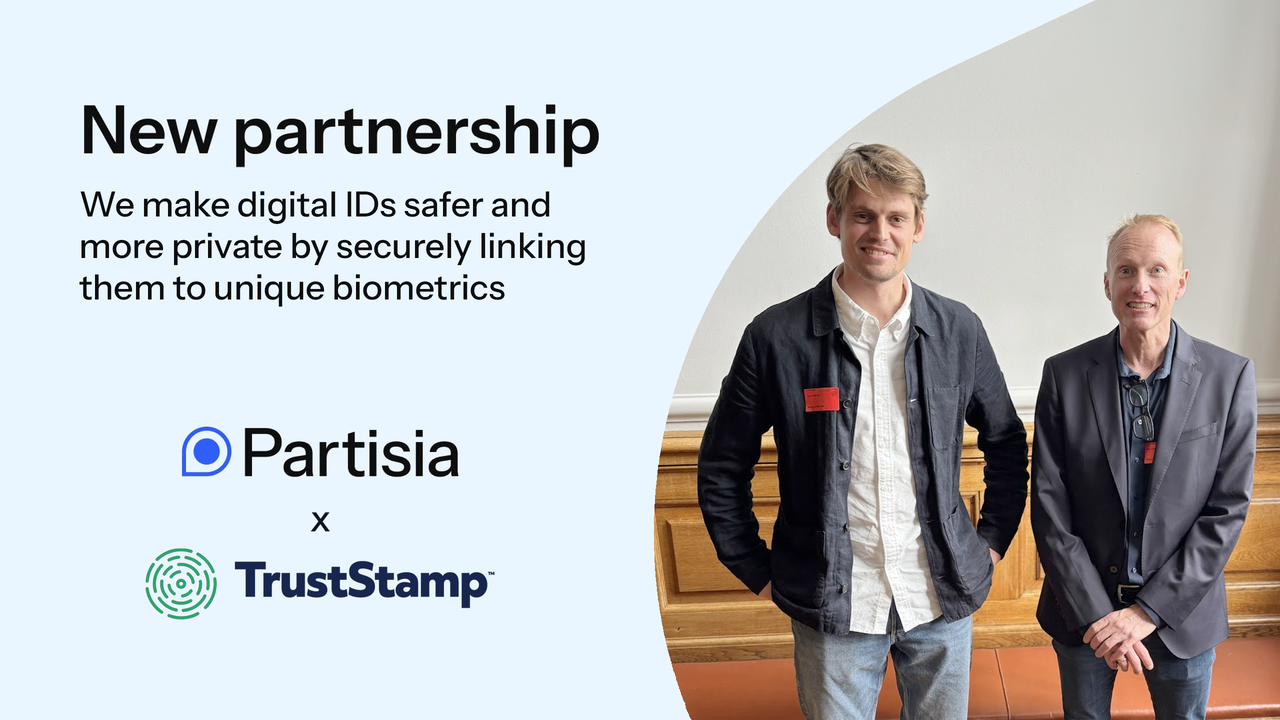
Partisia and Trust Stamp partner to make digital IDs safer and more private by securely linking them to unique biometrics

15 May 2025 – In a major step toward strengthening digital security and privacy, two deep tech companies, Partisia and Trust Stamp, have formed a strategic partnership to develop a more accessible and resilient solution for biometric holder binding. This partnership will deliver a foundational ...

universities authenticating themselves to an exam using DID

Universities transition from physical verification cards to digital ID

Every time we share our personal information, we risk exposing more about ourselves than we intend. Take a simple identity check: You show your ID card, and suddenly, you end up revealing your full name, date of birth, address and other sensitive details. This happens because an ID card can contain ...

People working together to create privacy by design solutions

Privacy by design: Definition, principles, and benefits

Data drives decisions, and to collect data, you need to think about privacy and build trust. That’s where privacy by design comes in: a proactive approach that embeds privacy into the very foundation of systems and processes.

Privacy-enhancing technologies (PETs): The future of data protection

Privacy-enhancing technologies (PETs): The future of data protection

Privacy is no longer just a compliance issue, it’s a competitive advantage. As more organizations rely on data to drive innovation, the challenge becomes clear: how do we unlock insights from sensitive information without compromising individual privacy or violating regulations?

computer screen showing a graph from a data sharing platform

Unlocking new possibilities with a secure data sharing platform

Data is now one of the most valuable assets a business holds. The ability to exchange it securely and efficiently has become a competitive requirement.

two persons discussing digital identity for foreign students and workers

Digital identity is broken - here's how to fix it for foreign students and workers

Why faster, safer identity verification is no longer optional for global institutions.

futuristic image of a robot hand to symbolize the international year of quantum

Why the International Year of Quantum matters more than ever

Quantum technology has long hovered at the edge of science fiction: enigmatic, complex, and seemingly decades away from everyday use. But that future is no longer distant. In fact, it's arriving right now.

person in healthcare taking data-driven decisions

Data driven decision making in healthcare: How analytics is transforming patient care

The healthcare industry generates a massive amount of data, from patient records and clinical trial results to administrative information and research findings.

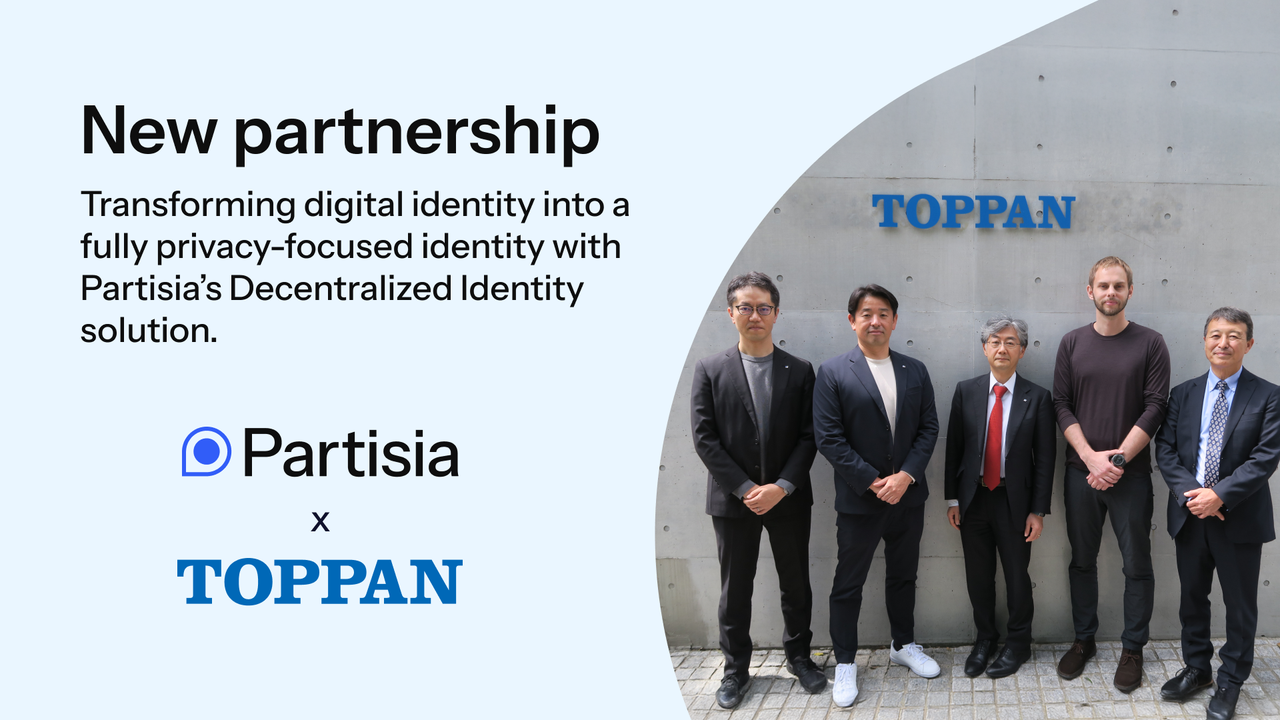
TOPPAN Edge partner with Partisia for privacy-first Digital Identities

TOPPAN Edge is partnering with Partisia to develop a fully privacy-focused digital identity using Partisia’s Decentralized Identity technology, to enable individuals to securely control their private data.

two persons doing tax control paperwork

Tax control across borders: Can you prove your transfer pricing is fair - without handing over your playbook?

The hidden cost of cross-border tax compliance. If you’re managing taxes across multiple jurisdictions, you already know the reporting burden is growing. Regulators want more transparency. Auditors expect faster turnaround. But every time you disclose internal pricing models or financial logic, ...

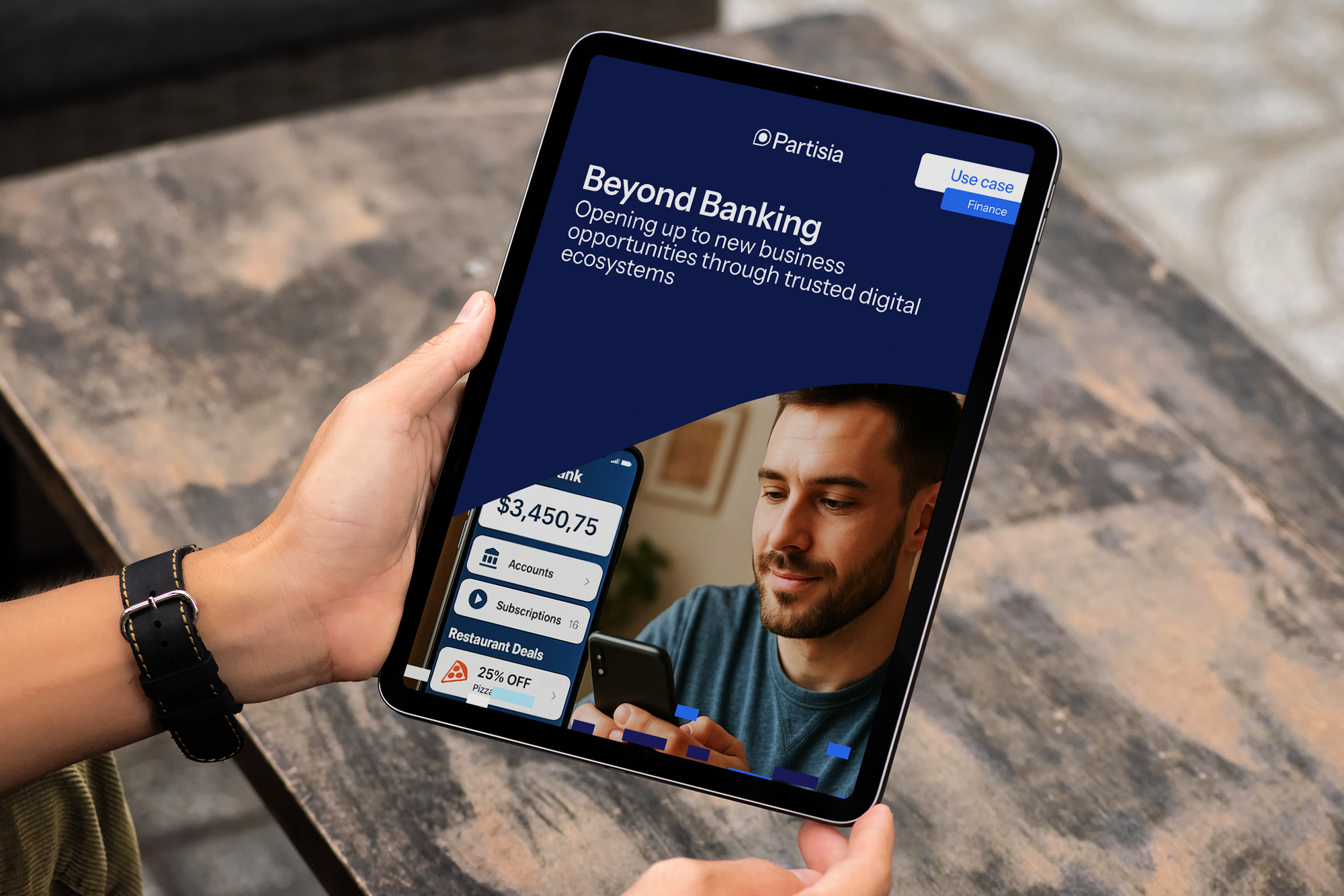
A man sitting indoors looks at his smartphone while a banking app on another phone screen shows his balance, accounts, subscriptions, and restaurant deals.

Beyond banking: New opportunities through trusted digital ecosystems

Digital banking is undergoing a subtle but transformative shift, one that’s not about launching new features or redesigning interfaces, but about how the banking app can provide tangible business value beyond traditional financial services.

A secure, decentralized approach to health data management

The true value of health data lies in its power to drive innovation and advance the greater good - improving individual health outcomes, enhancing quality of life, and streamlining workflows for healthcare professionals.

two regulators discussing how they can enforce compliance without compromising privacy

Oversight without overreach: How regulators can enforce compliance without compromising privacy

Turn privacy challenges into compliance strength with secure collaboration

Beyond connectivity: Verified identities are telecoms valuable asset

For decades, telecom companies have quietly powered our connected world. They built the networks, managed the infrastructure, and kept the internet humming. But while they’ve been essential, they’ve rarely been at the center of digital innovation. Until now.

Graphic announcing a new partnership between Partisia and Enversion to remove middlemen in registry research for diseases, cures, and medications.

Journl and Partisia partner up to turn research data upside-down

With its digital healthcare system and accurate CPR register, Denmark could become a mecca for international health research. But strict GDPR regulations and unclear healthcare legislation have hampered innovation until now. Now, new Danish encryption and integration software will make it possible ...

Partisia, Squareroot8 and NuSpace forge alliance for quantum-secure satellite communications

Partisia, a leader in multiparty computation (MPC), and Squareroot8, a provider of quantum-safe communication solutions, alongside NuSpace, a company specializing in IoT Connectivity Services and Satellite-As-A-Service have signed a Memorandum of Understanding to advance the future of secure ...

person scanning mobile device in a supermarket using selective disclosure to only choose what data he or she wants to share

Selective Disclosure: The power to share just enough

Sometimes, less really is more. Especially when it comes to your personal information.

person trying to implement data minimization

What is data minimization? Key tools and techniques

Businesses have long been taught to collect data like it’s gold. But in today’s privacy-first world, collecting less is often the safer and more respectful choice.

Person in a shop verifying identity using a mobile device with eIDAS 2.0

eIDAS 2.0 explained: The EU’s vision for digital identity

In our digital world, proving who you are online is becoming just as important as showing your passport at the airport. Whether you’re signing a contract, accessing health records, or applying for a loan, identity verification is now a key part of how we interact digitally.

Drive customer retention for life: gain new revenue and asset control

Build life-long customer relationships. The automotive industry is undergoing a profound shift, driven by connectivity and data. Every modern vehicle comes equipped with a digital twin and an Event Data Recorder (EDR), capturing huge amounts of unused data.

Aerial view of rows of parked new cars, representing automotive production, fleet management, and vehicle data collection.

How new EU regulations and data transparency are disrupting car insurance pricing

Recently, Danish media has highlighted a significant shift in car insurance pricing, with some of the largest industry players adjusting premiums by up to 30% to 80%. While these price changes may come as a surprise to policyholders and be challenging for insurers to justify amid market ...

person looking at mobile phone device

Digital identities reinvented: From centralized control to decentralized freedom

Imagine waking up one day to find that every piece of your digital identity—from your bank accounts and personal emails to your government records—has been compromised.

person looking down

How Partisia’s decentralized identity will transform IAM, IDV & KYC providers for better security & compliance

Decentralized identity management is reshaping the digital landscape across industries. By shifting control from centralized authorities to individuals, organizations empower users to manage their own digital identities—boosting privacy, convenience, and security.

two persons talking to each other

Whistleblower systems aren’t trusted - Fix that without exposure

Most companies claim to support whistleblowers. Few actually provide a system people trust.

person in front of laptop doing clinical research with secure data sharing

Revolutionizing clinical research with secure data sharing

The challenges of clinical research in a data-driven era: Imagine researchers from hospitals, pharmaceutical companies, and research centers joining forces on a global study for a rare disease. Each institution holds valuable patient data, representing critical pieces of the puzzle. Yet, sharing ...

On-demand workshop: Health data in the hands of civilians

On-demand workshop: Health data in the hands of civilians

Workshop 12. Marts 2025 Enversion // Partisia

Data breach originated from misconfiguration in internal IT platform

As digital systems in healthcare continue to handle more sensitive data, the need for strong security is more important than ever. While organizations work hard to balance access and security, challenges still pop up, reminding us that there's always room for improvement.

people collaborating on data using multi party computation and blockchain

Blockchain and MPC: The perfect match for secure data collaboration

In our digital world, data is the path to innovation. Think of all the breakthroughs possible if organizations could combine the data they hold, from anti-money-laundering checks among banks to research collaborations between competing companies. But how can they do so without exposing their ...

Cryptographer explaining multi party computation in front of a whiteboard

Multi-Party Computation (MPC): 5 quick insights from a Cryptographer on its growing potential

Multi-Party Computation is on its way as a revolutionary tool for secure data collaboration. We've caught up with Anders Peter Kragh, Senior Cryptographic Engineer at Partisia, to hear his take on the growing potential of this advanced technology.

Visual representation of data being kept safe by multi party computation and secret sharing

Secret Sharing and Multi-Party Computation: The key to secure data collaboration

Imagine being able to split private information – or “secrets” – into smaller pieces and distributing them securely across a network, even if not all participants trust each other. Each party holds only a share of the secret, and no single piece can reveal the entire information on its own. That’s ...

person using a digital ID on a mobile device

SingPass vs MitID: Why Singapore is outshining Denmark in digital identity management

By now, you may have realized that our digital and physical lives are merging faster than ever through the apps, services, and devices we rely on daily. Nonetheless, digital interactions have introduced major challenges in verifying identities and managing personal data. However, this isn’t a new ...

computer screen showing graphs from sharing data securely

Cross-Border KYC: A new path to secure data sharing

For multinational banks, operating across jurisdictions presents a unique challenge: ensuring compliance with local Know Your Customer (KYC) regulations while navigating the complexities of cross-border data privacy laws.

person in a bank detecting financial fraud on a laptop

How banks can unite to improve Anti-Money Laundering detection

Imagine you’re a compliance officer at PRT Bank, a medium-sized institution with branches in multiple countries. Every day, you and your team review large volumes of transactions, looking for any trace of suspicious activity - whether it’s unusually large cash deposits, suspicious cross-border ...

The world's first commercial use of Multi-Party Computation (MPC) was in a sugar beet auction

From theory to reality: The world’s first commercial use of Multi-Party Computation (MPC)

The world’s first commercial implementation of Multi-Party Computation (MPC) took place in 2008: The Danish Sugar Beet Auction. Here's the story of how sugar beets in Denmark helped pioneer this advanced technology.

Person wondering about the difference between PII and personal data

PII and personal data: Definitions and examples

Personally Identifiable Information (PII) and personal data are two ways to classify sensitive information. The terms can be confusing, as both refer to data that can directly or indirectly identify an individual, but their definitions can vary depending on the legal framework in question.

Data breach exposes thousand of Danish citizens health data

Living in Denmark, it likely hasn’t escaped anyone’s attention that there’s been a lot of media coverage focused on a recent cyberattack on a Danish private practice, which led to the exposure of highly sensitive patient data, and has underscored a growing crisis in healthcare security.

Two people discussing data privacy day 2025

Data Privacy Day 2025: Forward-thinking companies will change how we look at data privacy in the future

Every January 28th, we celebrate Data Privacy Day – an international effort to create awareness for companies and people around the world to focus on respecting privacy, safeguarding data, and enabling trust.

Two people working together to talk about cybersecurity and data privacy

Data privacy vs. cybersecurity: Why one can’t work without the other

Data privacy and cybersecurity are two related yet different fields. Understanding how they are connected can help you see how each one plays a unique role, especially when it comes to protecting private data. Let’s explore what sets these concepts apart.

New regulation prevent minors from social media account in Australia

It likely hasn’t escaped anyone’s attention over the past couple of weeks - whether from magazines or news broadcasts - that TikTok, Instagram, and other social media platforms in Australia are now required to verify that users are at least 16 years old. Parental consent is no exception to this ...

PDF: Whitepaper - Secure Multiparty Computation Goes Live

PDF: Whitepaper - Secure Multiparty Computation Goes Live

Read the official whitepaper that reports on the first large-scale and practical application of Secure Multi-Party Computation, which took place in January 2008. Introduction How a group of researchers pioneered Multi-Party Computation with a sugar beet auction In the whitepaper, Secure Multiparty ...

Partisia COO, Peter F. Frandsen, smiling while working on a laptop with a Partisia sticker.

The future of privacy and security: Conversation with COO at Partisia

“First and foremost, I don’t believe in revolutions. For one, very few of them ended well. I’d rather say; the train is moving, so jump on board! - there’s room for everyone.” - Peter Frands Frandsen

Improve recovery of critical data in disaster zones

Did you know that Japan has kept detailed earthquake records for over a thousand years? Given this history, it’s no surprise that Japan is among the most earthquake prone countries in the world. Every year, Japan experiences more than a thousand earthquakes. Most are mild enough not to cause any ...

person paying in a tablet using a digital ID wallet with DID made in according to eIDAS

What would eIDAS mean for wallet and DID providers?

The eIDAS regulation is set to transform the way we see and use digital identity across Europe, and wallet and Decentralized Identity (DID) providers are at the forefront of this evolution. But what does this mean for the industry - and for the citizens of Europe?

Protecting health data in a time of evolving privacy concerns

As privacy issues around personal health data make headlines, one of the most urgent questions facing society is: Who truly owns our data? And perhaps more critically, how can we be assured that our data won’t be used against us?

person using a digital wallet on a mobile device

Enhance Digital Wallet offerings using Multi-Party Computation

As cyberattacks become increasingly advanced and frequent, safeguarding personal data is more crucial than ever. As a response, the European Union has recently unveiled an ambitious regulatory plan, aimed at fortifying digital security infrastructure across member states and empowering citizens to ...

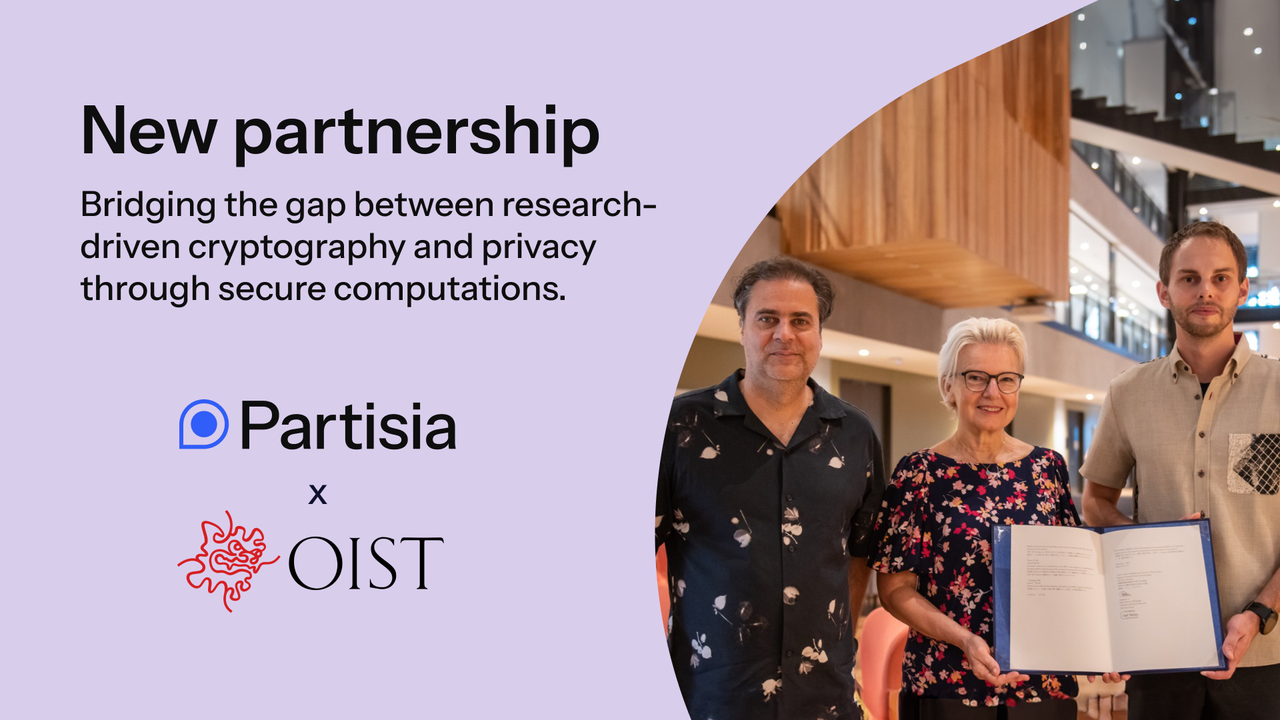
Okinawa Institute of Science and Technology (OIST) and Partisia Partnership

OIST and Partisia advance development of Privacy Enhancing Tech

Bridging the gap between research-driven cryptography and privacy through secure computations.

New digital regulations: implement data privacy in the process

The days of simply clicking "yes" or "no" in a pop-up box when shopping for alcohol or cigarettes (also e-cigarettes) online have come to an end.

Are quantum computers telescopes into the future?

The quantum age is rapidly approaching, accelerating faster than ever before. While it brings significant challenges, it also holds the potential for new opportunities.

How to pave the way for secure data use forfinancial institutions

The threat posed by quantum computers is not just a distant concern; it’s already taking shape. Determined attackers can store encrypted sensitive data now, with the intention of decrypting it later using quantum computing – a tactic known as the “harvest now, decrypt later” attack. This highlights ...

futuristic visualization of quantum computing

Towards a Post Quantum, Succinct Publicly Verifiable MPC Platform

Partisia Blockchain is an MPC platform with two main parts: a public ledger (blockchain) and the ability for selected servers to collaborate and perform multiparty computations (MPC) as a service. This public ledger is designed to offer secure and private computing services for clients who need to ...

Line-art depiction style with the headline of the article

A Cryptographer's Feedback on the European Digital Identity Framework

On the EU Digital Identity Wallets Dilemma: Unlinkability or LoA High?

Partisia and Rajah & Tann deliver privacy solutions for health sector

Living in a world where technology is rapidly and constantly evolving, the need for privacy-enhancing technologies is at an all-time high. Partisia addresses these challenges by providing solutions that ensure secure data sharing through advanced encryption and privacy-preserving technologies. On ...

The new EU AI act - are your company still compliant?

In recent years, the focus on privacy and data protection has become more critical than ever, and this trend is only set to intensify. This article provides a comprehensive overview of the most important aspects of the new regulation.

Webinar summary: Enabling Collaborative Ecosystems by Computing on All the World’s Data

The 10th of July, 2024, Partisia and Data, Privacy and Innovation held an interesting 1-hour webinar on Privacy Enhancing Technologies and Computing on all the world’s data.

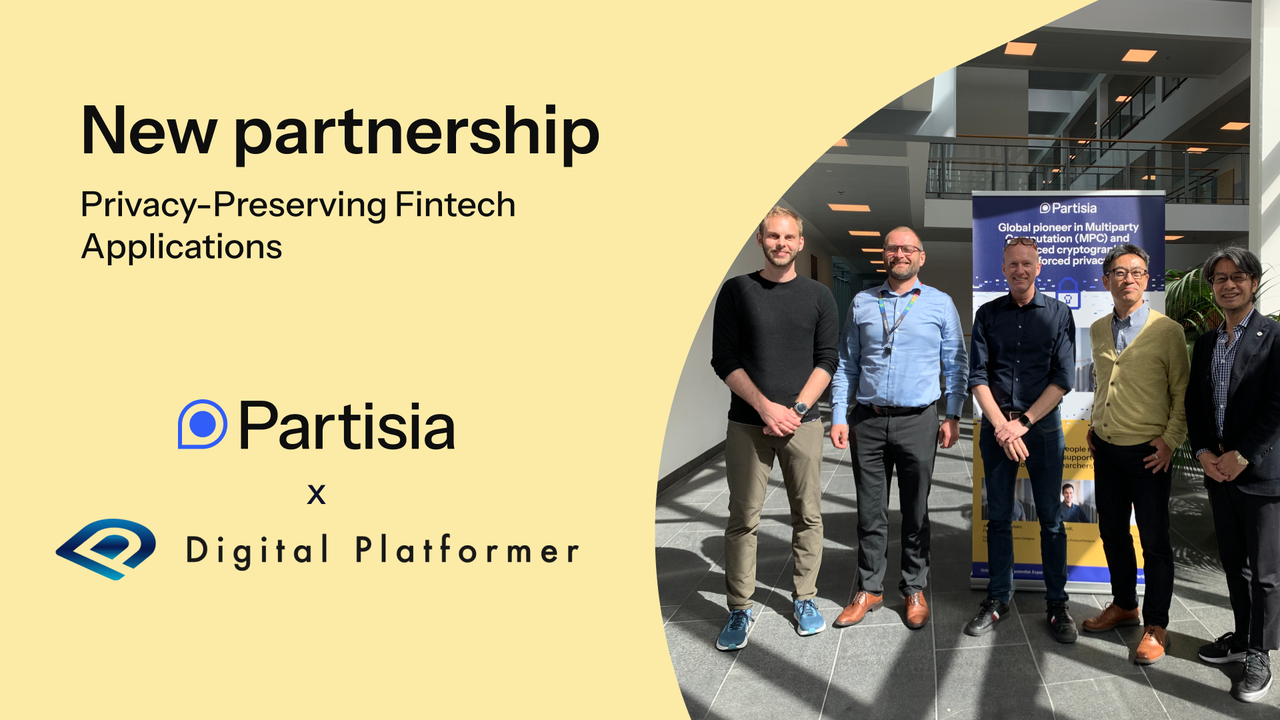
Digital Platformer partners with Partisia

New partnership to change the way we detect financial fraud today

When discussing fraud and its significant impact on the world and our daily lives, the conversation often focuses on fintech, fraud detection and particularly areas like money laundering, tax embezzlement and other criminal activities.

Digital Platformer and Partisia partner to build Privacy-Preserving Fintech applications

In a society where interconnected digital procedures can not be overstated, the need for data security solutions and innovative methods to safeguard our data, while maintaining user control - is more important than ever. And the fintech industry, having financial fraud detection and the protection ...

Quantum computer processor unit on display, showing intricate gold and metal wiring in a cylindrical, multi-layered structure

Data privacy in a post-quantum world

Quantum Computers will have a profound impact on the cryptographic schemes currently deployed in our digital infrastructure. It is well known(1) that most of the mechanisms currently protecting our digital lives will be broken when quantum computers become powerful enough. The quantum computer ...

ADC Consulting and Partisia enters a strategic partnership

In a world where technology and digital transformation are evolving at an unprecedented pace, nearly every aspect of life - whether you’re looking as a business or as a private person - is touched by this rapid advancement. At both ADC Data & AI Consulting and Partisia, we believe that the ...

Transforming healthcare data management across the EU

Without the feeling of control and trust, people usually have second thoughts when it comes to allowing organisations, companies and even individuals access to their health data. Lack of transparency and overview of how and where your data is used also adds to insecurities. This is particularly ...

Zero-Knowledge proofs - Prove anything without revealing everything

Imagine being able to convince someone you are right without having to explain why. What if you had a special tool that could magically win arguments for you, as long as you were right and knew the reason, without revealing anything other than the fact that you were right? That would be a pretty ...

Ethical data practices and the importance of informed consent

Ethical data practices and the importance of informed consent with Partisia and Data for Good

Recently, there has been extensive media coverage in Denmark about a significant research project involving health data.

Making the most of Danish public health data

Danmarks Statistik And the Danish Health Authority are two Danish organisations. With Danmarks Statistik dedicated to gathering statistical information about Denmark's population and Danish Health Authority holding comprehensive health data. Together with DataFair, Enversion, Innovationsfonden and ...

Leading deep tech with privacy enhancing technology that European AI law and EHDS are driving evolution

In the 93rd instalment of this series, we covered European Privacy Enhancing Technology (PET) standardisation and industry creation support activities starting with the General Data Protection Regulation (GDPR). Ahead of the enforcement, deep tech activities responsible for PET are accelerating. ...

EU's Identity Wallet Regulation: Enhancing Cybersecurity and control

Given the increasing frequency of cyberattacks and corporate system breaches securing personal information is only becoming more relevant.

Cover of Partisia whitepaper on decentralized identity, featuring title, logo, and abstract digital graphics

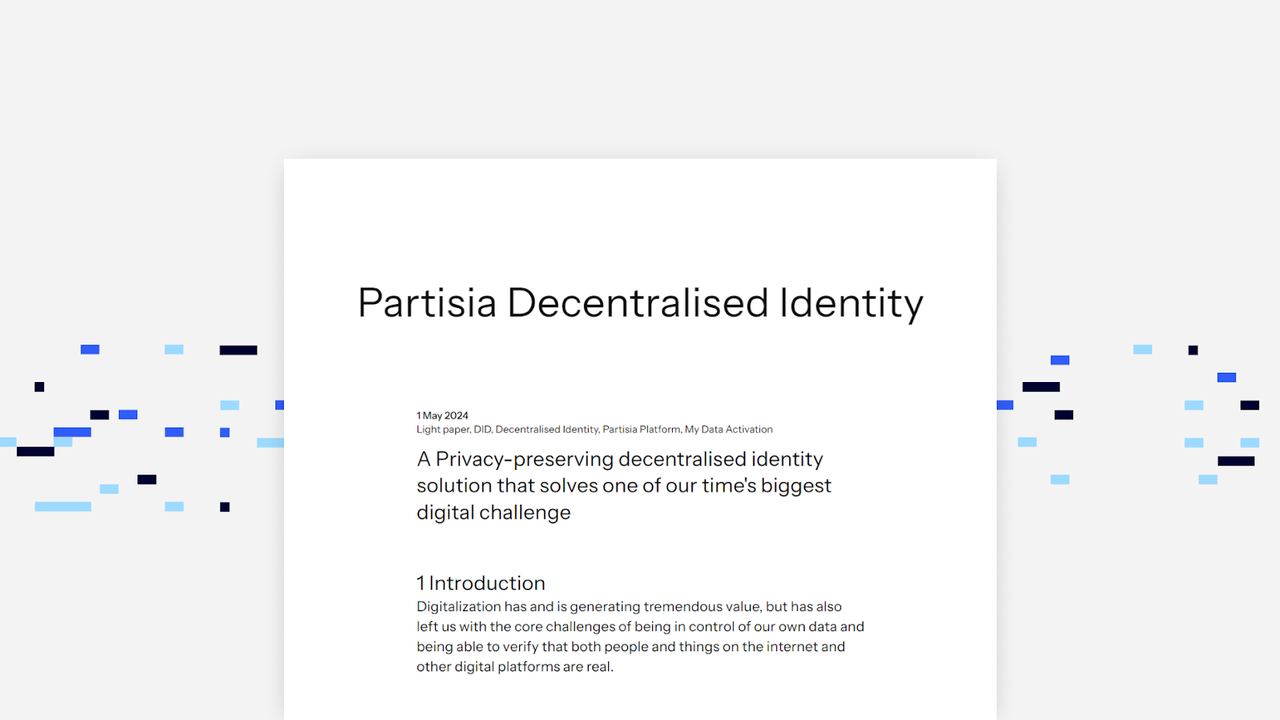
Partisia Decentralised Identity

A Privacy-preserving decentralised identity solution that solves one of our time's biggest digital challenge

Collaboration address national security in the global quantum race.

Unfortunately, global tensions are evermore present and reliable information is inevitably a crucial part of the growing number of security conflicts.

PDF: Lightpaper - Decentralized Identities - DID

PDF: Lightpaper - Decentralized Identities - DID

The basic concept The goal of the Partisia decentralised Identity is to connect people (and things) with trustworthy verifiable attributes and other verifiable information. The trustworthy information comes from multiple verifiable sources such as the issuer of driver's licenses or education ...